Shopping season starts in September

The default Q4 plan still looks like this. Creative gets briefed in October, most of the budget waits for Black Friday and the December sales, and September is treated as a warm-up. Call it the Black Friday flight. TikTok's latest research in Kazakhstan says that plan now arrives late.
Q4 on TikTok starts in September. Brands who wait for Black Friday are already late.
The room in Almaty
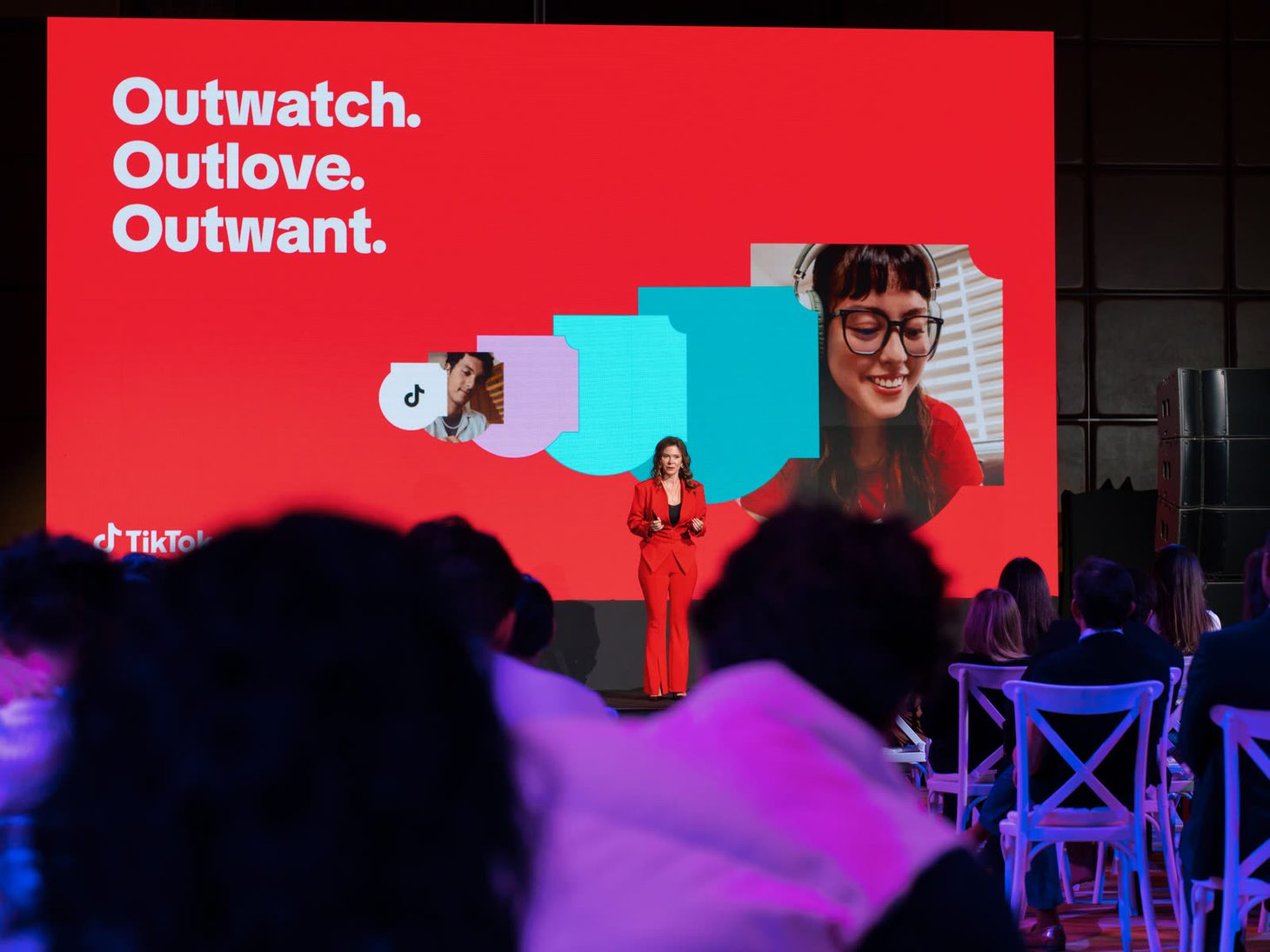
Last week the TikTok for Business team hosted Shopping Season in Almaty, its autumn season kick-off for brands and agencies. I wasn't there this time. My Aleph colleagues were, with Aigerim Kurmanaliyeva there with the team, and I'm glad they made it.
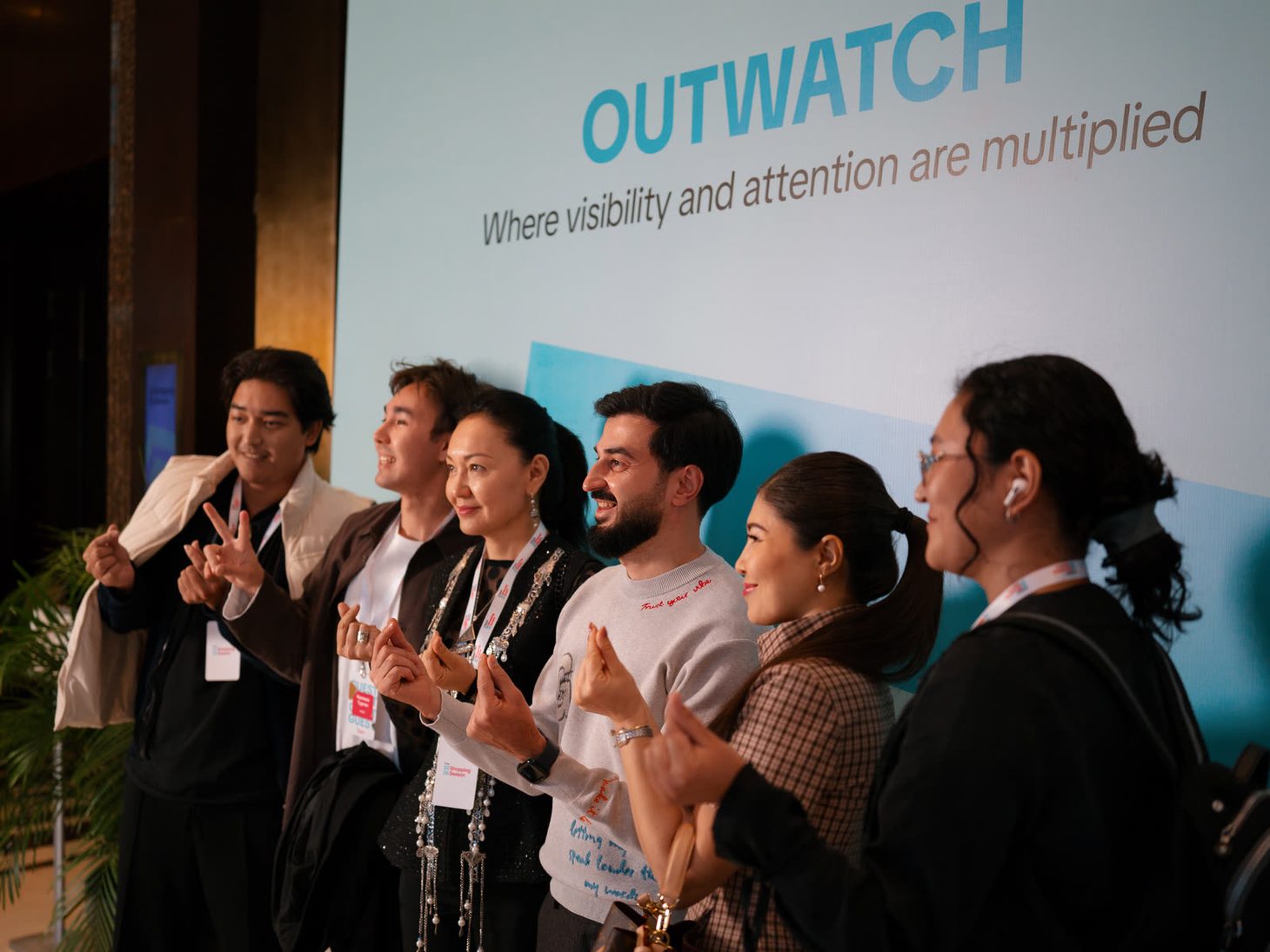
Aleph has been the exclusive TikTok for Business sales partner in Kazakhstan since 2021. Most of our work since then has happened online: campaigns, Smart+ setups and weekly calls with brands. An event works differently. You hear what brands need before the peak weeks begin, and you sit with the people who will actually run the ads. I still prefer when our team can be in the room. It keeps the advice concrete instead of theoretical.
I know that format from the organising side. In May 2022 I co-led TikTok for Business Level Up in Almaty with a colleague. Over five days at SmartPoint we met selected agencies and top-spending brands for workshops, morning briefings, agency deep-dives, lunches and dinners. A lot of the real work happened at the table, between the sessions.
What TikTok's research shows
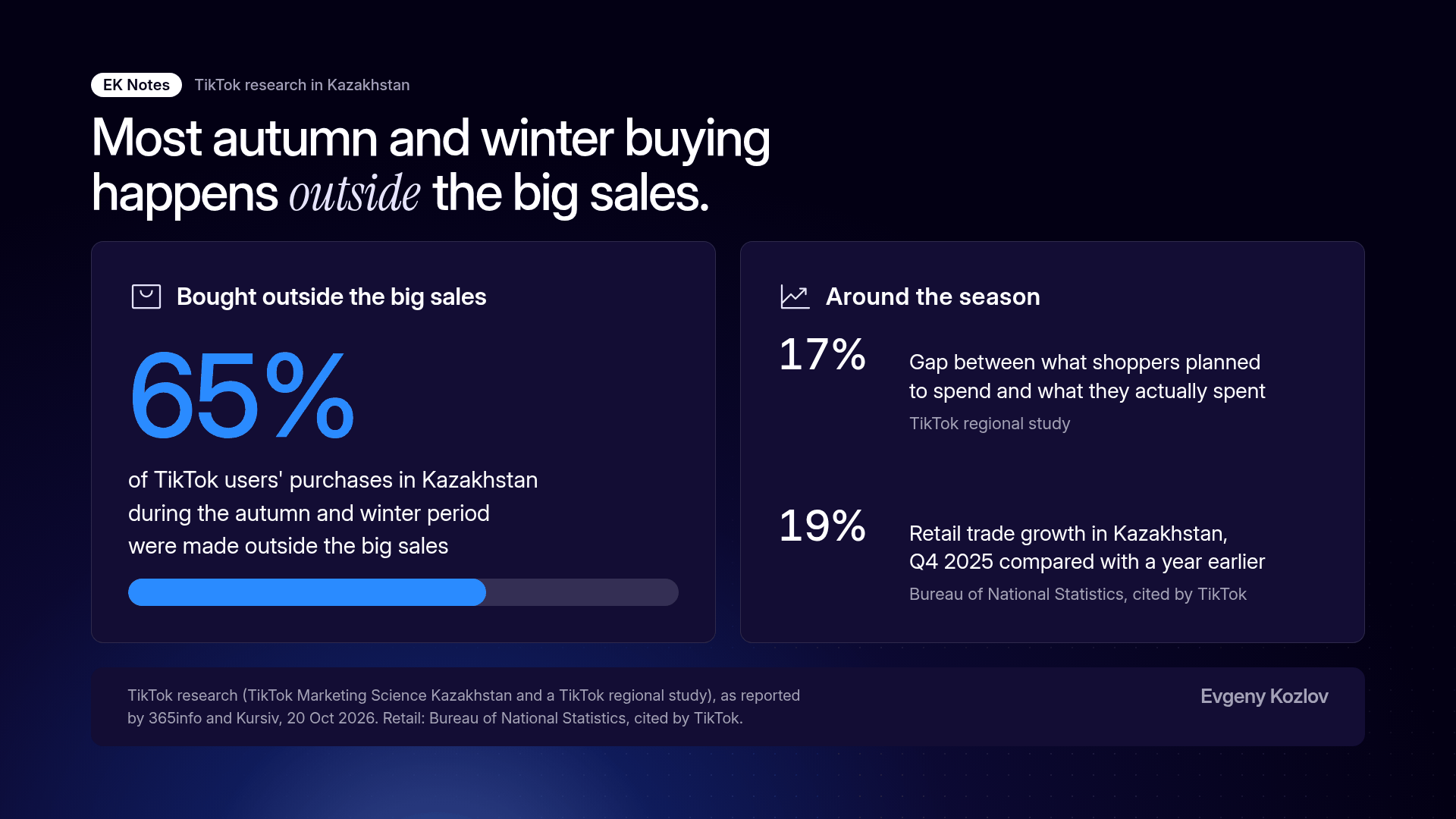
The figures below are TikTok's own, from its Kazakhstan shopping season materials published on 20 October.
TikTok Marketing Science says 65% of its users' purchases in Kazakhstan during the autumn and winter period were made outside the big sales. Views of shopping-related videos start rising in September and keep climbing through December. Demand builds for a whole season, and Black Friday sits near the end of it.
The market around it is growing too. TikTok cites the Bureau of National Statistics: retail trade in Kazakhstan grew 19% in Q4 2025 compared with a year earlier. It also points to research that puts the average ad view at 2.2 seconds, and its own regional study found that shoppers' actual spending came in 17% below what they had planned.
Put together, that is a long season with short attention. My reading of it: a brand that shows up only when the discount does meets buyers who have been watching other brands since September, and it gets about two seconds to change their mind.
The Black Friday flight against the September curve
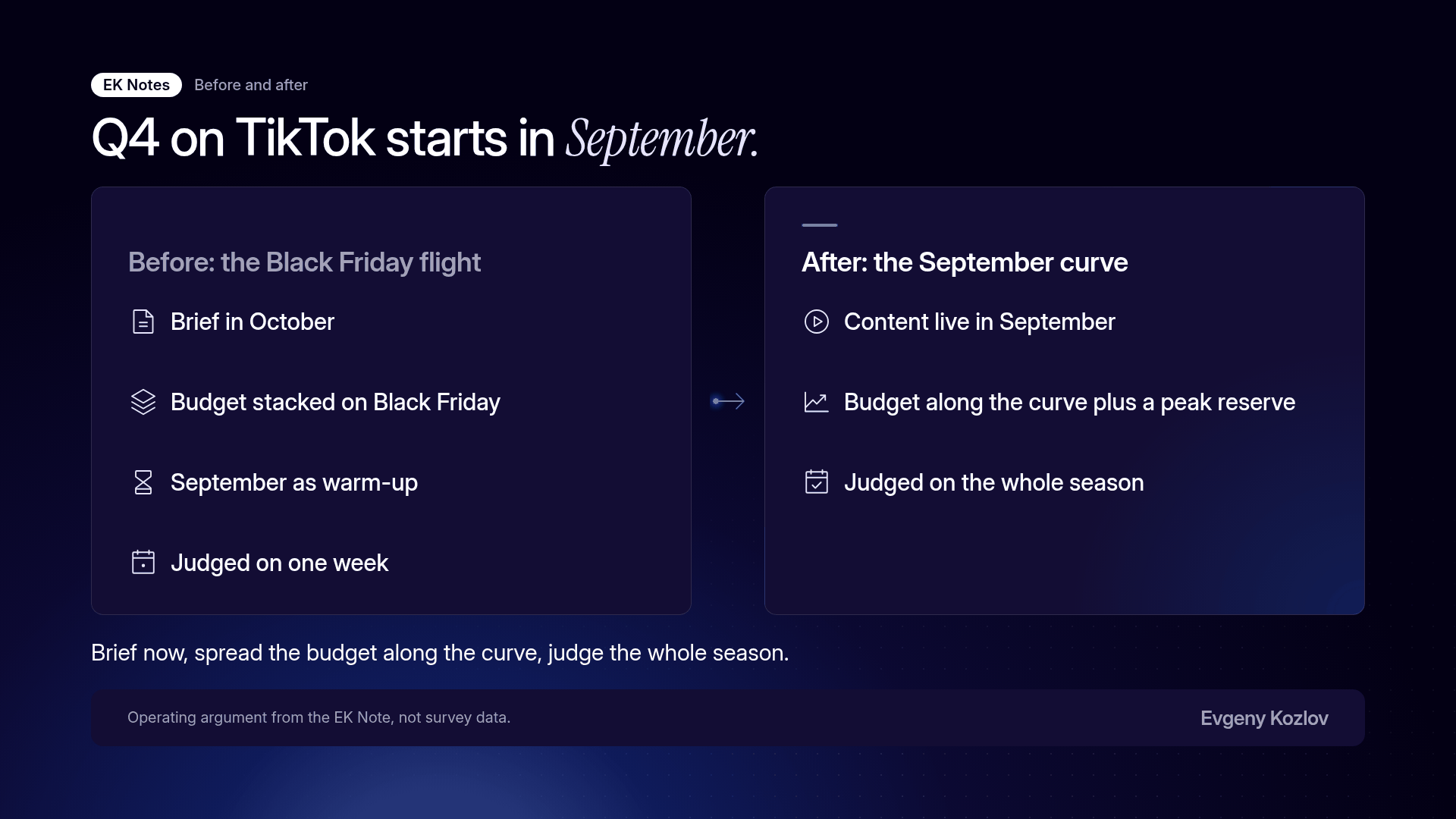
The Black Friday flight treats September and October as quiet months and judges Q4 on the week the money was spent. The September curve treats those months as the time when people build their shortlist, and it judges Q4 on the whole season.
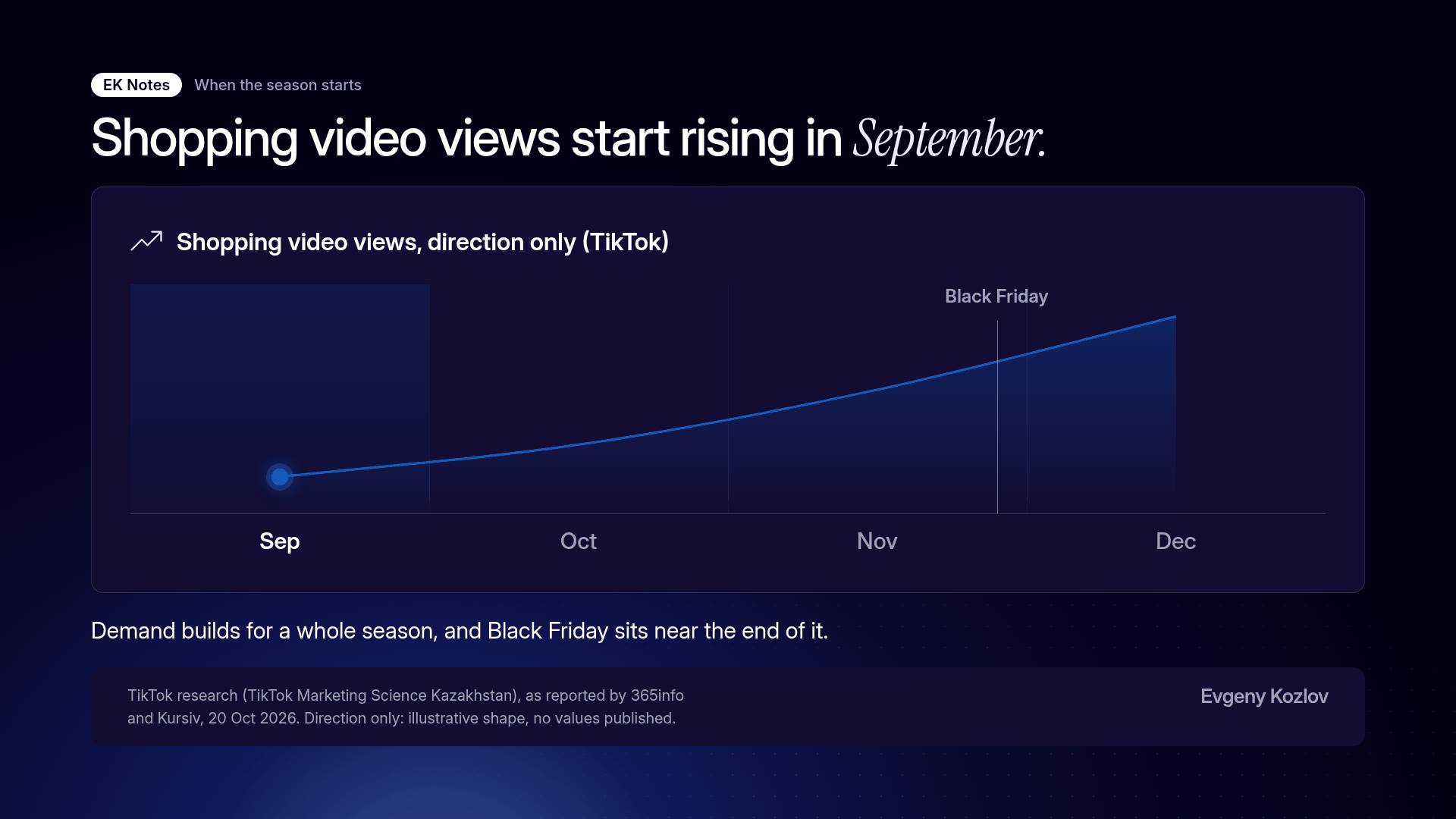
The season, month by month
Choose a month. Bar heights show direction only: TikTok published no values.
September
Shopping video views start rising.
Brief product, review and demo content now, so it is live while interest is still climbing.
October
The Black Friday flight treats September and October as quiet months.
The September curve treats them as the time when people build their shortlist.
November
Black Friday, 27 November, sits near the end of the season.
Keep a reserve for the peak days instead of putting everything there.
December
Views keep climbing through December.
Report Q4 across the whole season, so the September content gets credit for the December sale it set up.
Three changes I would make to a Q4 plan this week: (1) brief product, review and demo content now, so it is live while interest is still climbing; (2) spread the budget along the curve from September to December, and keep a reserve for the peak days instead of putting everything there; (3) report Q4 across the whole season, so the September content gets credit for the December sale it set up.
TikTok's own advice for the season starts in the same place. Its five recommendations to brands in Kazakhstan are to start early, bet on creativity, speak the audience's language, help people choose, and use automation such as Smart+.
There is a brake. A brand with nothing to sell before December, or one whose year really is a single sale, can still do well with a sharp peak. The research says most purchases sit outside the big sale days, which still leaves a real share inside them.

Thank you to the TikTok team
Thank you to the TikTok team behind Shopping Season Kazakhstan 2026 and to everyone who keeps investing time in this market: Julia Kushnir, Cihan Ozturk, Rena Guliyeva, Svetlana Kirillova, Daniyar Ismailov, Timur Sultanbek, Syrgak Erkinbek uulu, Nadim Arasoghli and Yasmine Sewilam. Five years into our partnership, I'm still glad these rooms happen in Almaty and not only on calls.
Confirmed and plausible
Confirmed: the 65% figure, the September to December rise in shopping video views, the 17% spending gap and the five recommendations, all attributed by TikTok to its own research and read in the 365info and Kursiv coverage of 20 October on 26 October 2026. The 19% retail figure is the Bureau of National Statistics as cited by TikTok. The 2.2 second figure comes from research TikTok cites without naming it, so treat it as plausible. Shopping Season is TikTok's advertising season for brands, not a new store or shopping feature.
Plausible, not proven: that spreading Q4 spend along the curve beats a single peak for any given brand. That is my reading of TikTok's numbers, and the way to test it is your own Q4 data, week by week, against last year.
Sources
- 365info.kz, "Сезон распродаж становится длиннее: как брендам Казахстана привлечь покупателей и увеличить продажи", 20 Oct 2026, read 26 Oct 2026 (TikTok Marketing Science Kazakhstan: 65% of users' autumn and winter purchases outside big sales; shopping video views rise from September through December; Bureau of National Statistics: Q4 2025 retail trade +19% YoY; average ad view 2.2 s; TikTok regional study: actual spend 17% below planned; five recommendations.)
- Kursiv, "Как казахстанским брендам увеличить продажи в сезон скидок и что для этого нужно", 20 Oct 2026, read 26 Oct 2026 (same TikTok figures; average ad view fell from 4 to 2.2 seconds over six years.)
- Evgeny Kozlov, LinkedIn post on Shopping Season 2026 and own comment, 22 Oct 2026 (photos; colleagues attended; exclusive partner since 2021.)
- Evgeny Kozlov, LinkedIn, 19 May 2026 (TikTok for Business Level Up, Almaty, 2022)
- Evgeny Kozlov, LinkedIn, 1 Sep 2026 (five years as exclusive TikTok for Business partner in Kazakhstan)
Related notes
- Ask for the layer under the headlineFour sessions at Israel Mobile Summit, one habit I took home. Before you act on a vendor's headline, ask for the fact one level below it.
- The whole app chain in one dayIsrael Mobile Summit put infrastructure, payments, growth and measurement in one building. My notes on the day, the people and the sessions.
- The marketplace is your new channel partnerWhen enterprise buyers find agents inside a platform's marketplace and pay with spend they have already committed, the listing stops being a directory entry. It needs a launch plan, the way a new distributor does.