Closed-lost is the seller's version
- B2B marketing
- Lessons

The QBR slide is already written. Closed-lost: price. Or functionality. Or "committee politics." Marketing takes that dropdown, turns it into a messaging brief and an ICP filter, and the 2027 plan locks around a story the buyer never told.
The closed-lost field is the seller's account of a decision the buyer made. If that account matches the buyer only about a third of the time, a messaging and ICP plan built on it is built on the wrong story.
The 30% gap
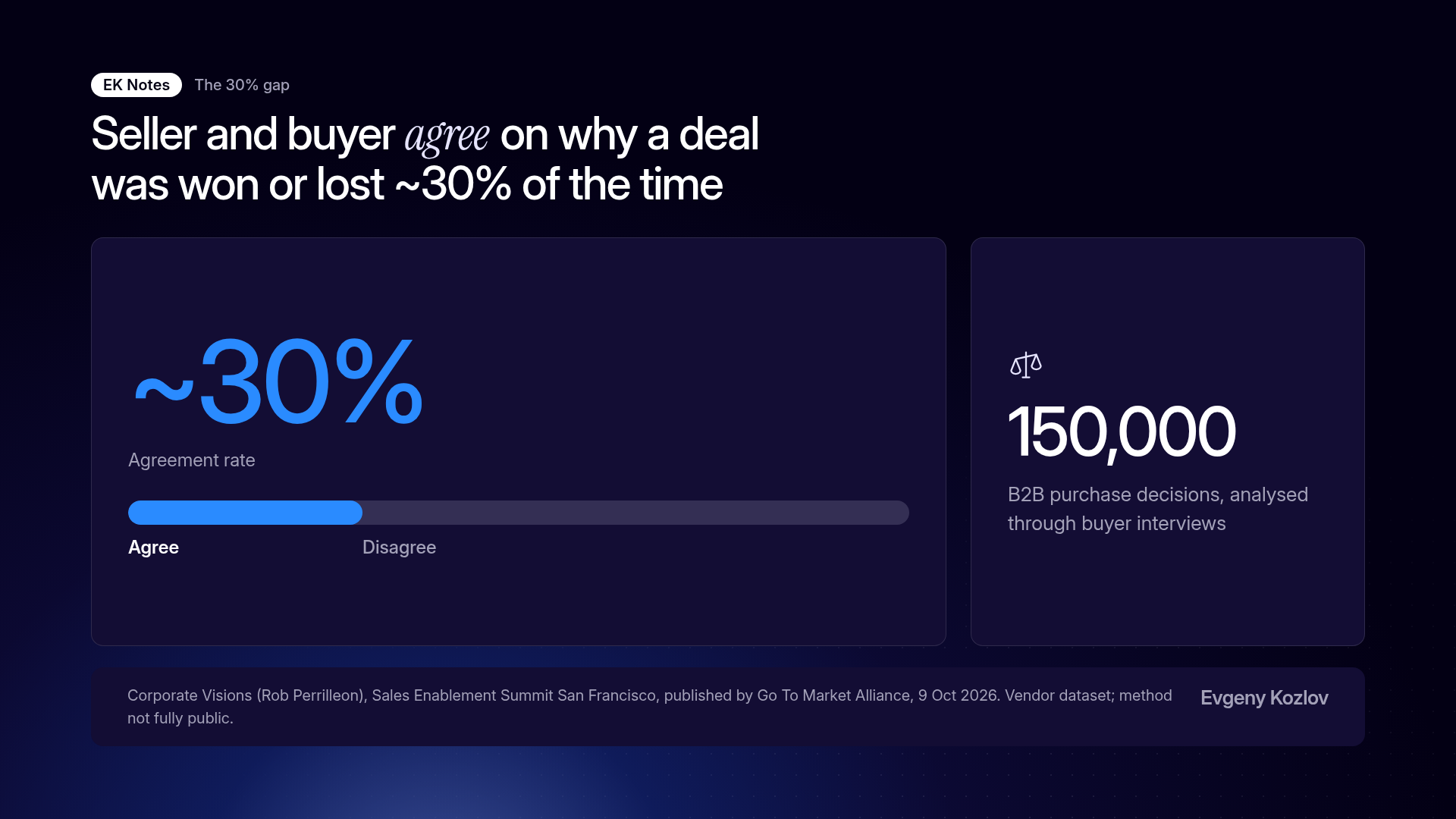
Corporate Visions (Rob Perrilleon, SVP Client Experience) spoke at the Sales Enablement Summit in San Francisco. Go To Market Alliance published the talk on 9 October 2026. They analysed 150,000 B2B purchase decisions through buyer interviews. Seller-reported win and loss reasons matched the buyer's view only about 30% of the time.
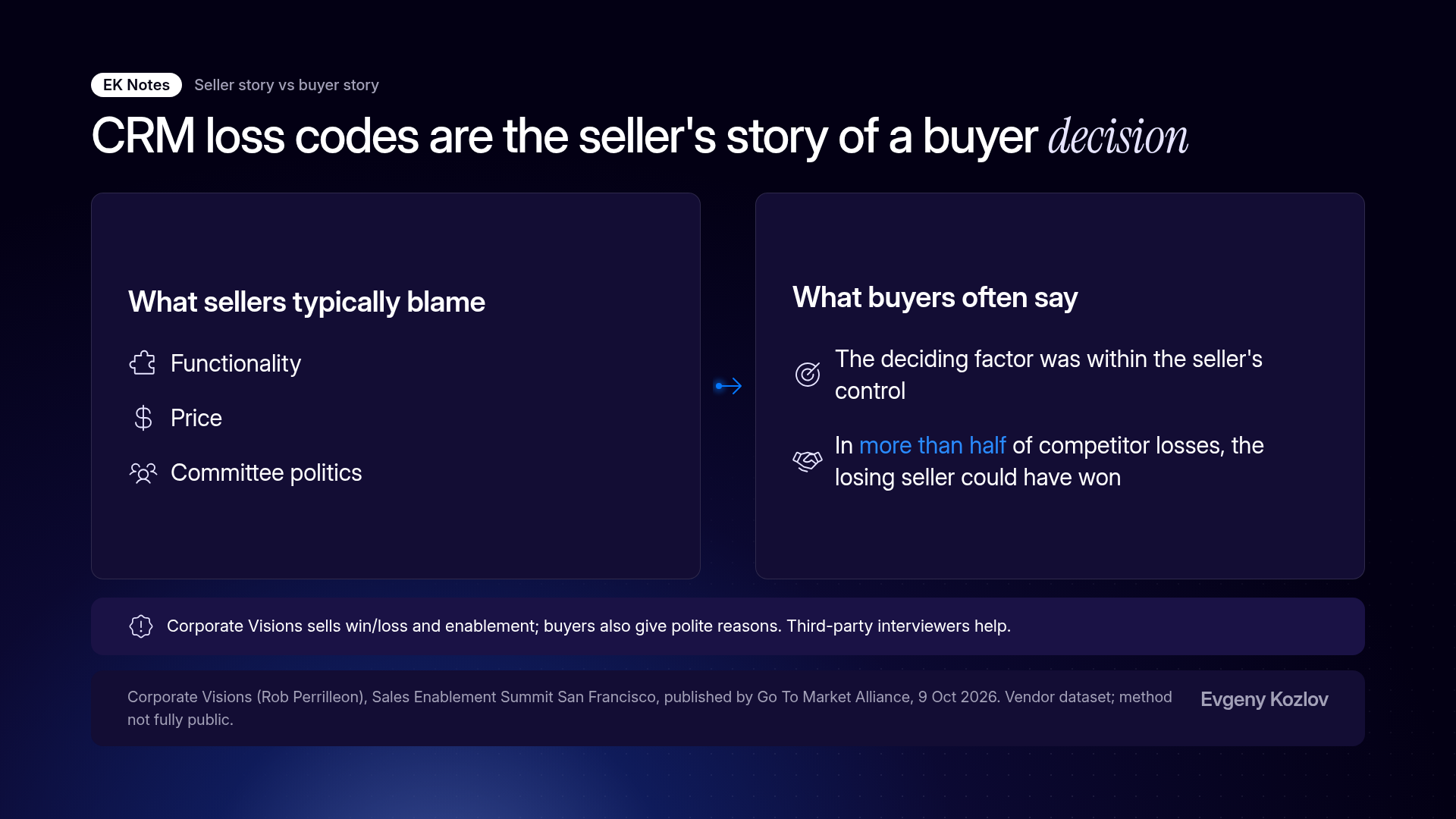
When sellers lose, they typically point at functionality, price or committee politics — factors that feel outside their control. Buyers describe a different decision. In more than half of the deals lost to a competitor, buyers said the losing seller could have won, and the deciding factor was within the seller's control.
I treat this as a Confirmed direction from a vendor dataset, not a law of nature. Corporate Visions sells win/loss and enablement work. The method behind the 150,000 figure is not fully public. Buyers also give polite answers in interviews ("price"), so who asks the questions matters. Still, the gap is large enough that I would not bet a year's messaging on CRM codes alone.
What the dropdown does to next year's plan
Q4 is when messaging, ICP and territory get locked for the next year. In Cyprus, Malta, Kazakhstan or Azerbaijan teams I talk to, that lock looks the same as elsewhere: a handful of reason codes rolled up into a slide, then a brief that says "we lose on price" or "we need more features."
If the seller's version is wrong two thirds of the time, the brief teaches the wrong lesson. You sharpen a price story when the buyer cared about how the deal was run. You chase a feature gap when the gap was responsiveness or who you put in the room. You widen ICP to "anyone with budget" when the real filter was accounts that will not let you reach the people who decide.
Conversation intelligence tells you what was said on calls. CRM tells you what the seller typed after. Buyer interviews tell you what actually moved the decision. Most teams run the first two and call it win-loss. The third is the missing input.
What I would do before the plan locks
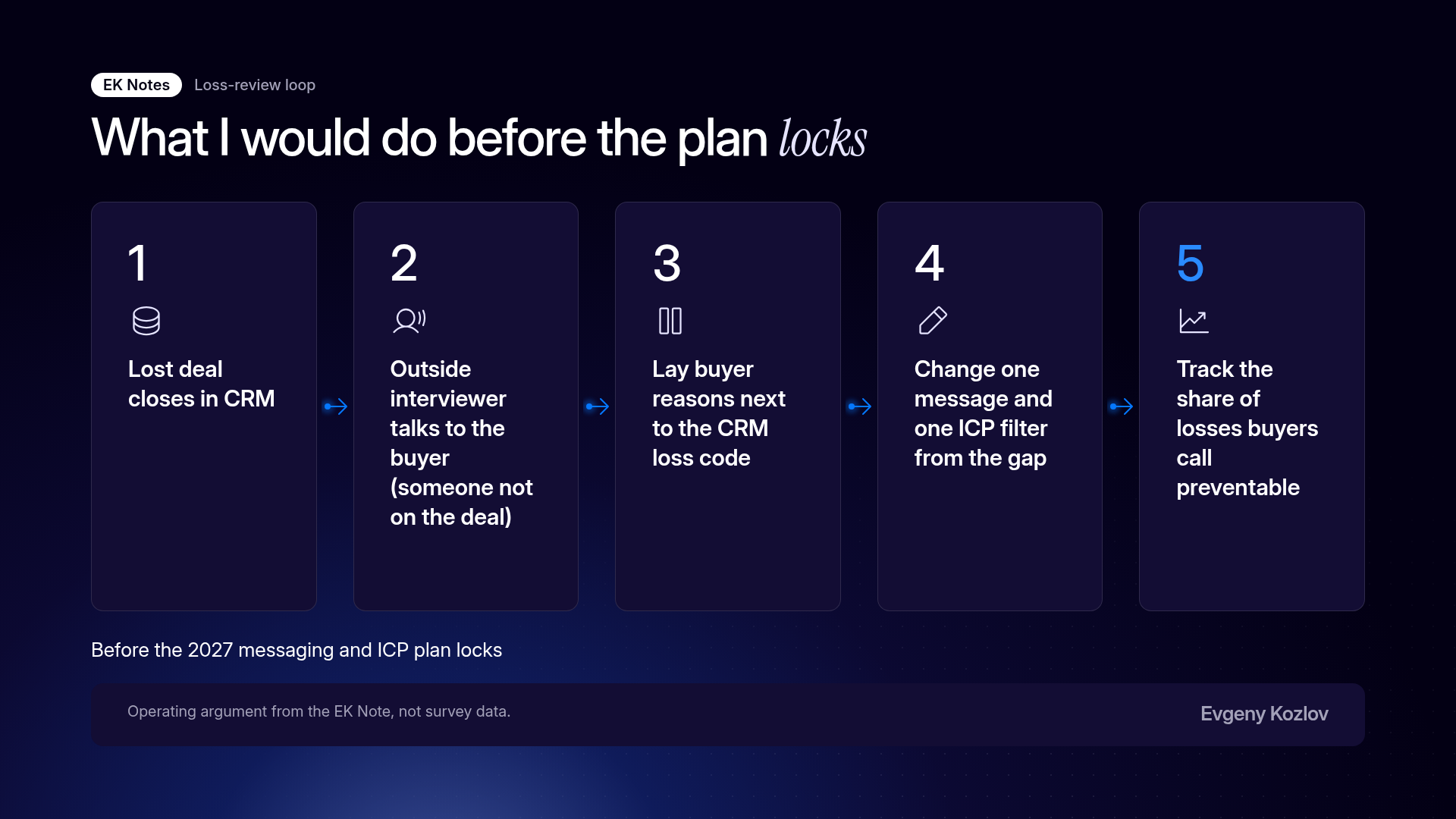
I would not wait for a perfect programme. Before 2027 messaging and ICP freeze, I would:
- Pick 8–10 recently lost deals (new logo, not renewals) and have someone outside the deal interview the buyer — RevOps, a third party, or a marketer who was not in the room.
- Lay those reasons next to the CRM loss codes for the same opportunities. Write down where they diverge.
- Change one message and one ICP filter based on the gap — not a full rebrand, one concrete edit each.
- Start tracking the share of losses where the buyer says the outcome was preventable. That becomes the KPI that replaces "we lost on price" as the headline in the QBR.
If you only close a handful of deals a quarter, interviews are anecdotes. Then read the call recordings and the lost-deal email threads instead, and still do the side-by-side with the CRM code. Some losses really are product gaps. The point is not that sellers are always wrong. It is that you cannot tell which world you are in from the dropdown alone.
Ship one message and one filter that match what buyers said. A polished plan that only matches what sellers typed can wait.
Sources
Related notes
- Brand loses the budget meeting in the wrong languageBrand budgets rarely lose on belief. They lose because the pitch never becomes a line in finance's pipeline model.
- Your AI SDR is a deliverability programAn outbound agent on a big list mostly spends your sender reputation. Replies come from small segments, checkable facts and a human edit.
- Satisfied is not safeSatisfied customers still review partners. Treat renewal as a marketing job, not a CSAT score.